Office Coffee Station Ideas (Desk, Home Office & Shared)
"Office coffee station" means three quite different things — a corner of your own desk, a home office setup, or a shared kitchen serving a whole team. They have almost nothing in common practically, so this guide splits them properly rather than pretending one list covers all three.
1. The desk-side setup (1 person, minimal space)
The goal here is coffee without leaving your chair, in a footprint that doesn't compete with your monitor.
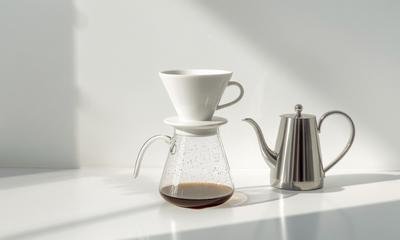
- Pour-over dripper. A single-cup dripper sits on your mug, needs no power, makes no noise, and stores in a drawer. The safest option in any office with rules about appliances.
- Small French press. A 12oz personal French press makes two cups, needs only hot water, and cleans in a sink.
- Insulated mug, not a regular one. The genuine desk problem is coffee going cold during meetings. An insulated mug with a lid solves that and prevents the keyboard disaster.
- A small tray. Contains drips and marks the boundary between coffee zone and work zone.
2. The home office corner (1-2 people, more freedom)
You own the space, so you can build something permanent. The main advantage over a kitchen station: you don't break concentration walking to another room.
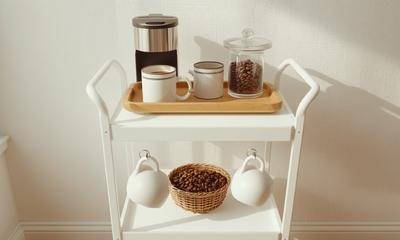
- A slim rolling cart. The best home-office answer — it holds machine, mugs and supplies, and rolls out of the way for calls. Covered in depth in our small-space coffee bar guide.
- A shelf of an existing bookcase. Dedicate one counter-height shelf. Add a tray, and it reads intentional rather than improvised.
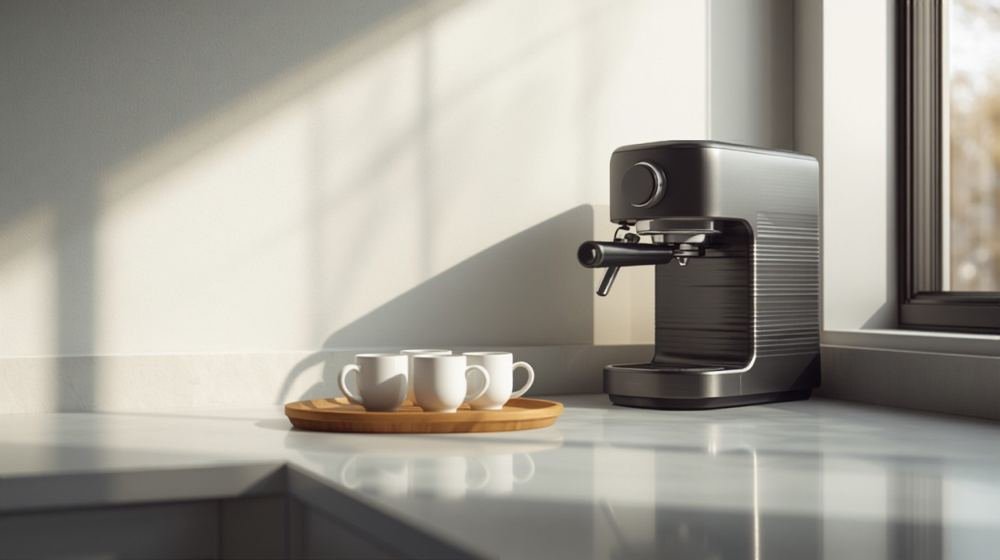
- A slim espresso machine. If you want real espresso, machines under six inches wide exist for exactly this — see the compact picks in our beginner espresso guide.
- A kettle plus grinder combination. Quieter than an automatic machine, which matters if you take calls. Grinders are the loud part; our grinder guide flags the quietest one in the budget class.
Placement in a home office
Three practical constraints, in order: near an outlet, away from paper and electronics, and not directly behind your chair (you'll knock it). A side wall or a corner behind your desk works better than the desk itself.
Check price on Amazon →3. The shared office kitchen (a team)
This is the hardest version, and equipment is rarely the reason it fails. Shared stations fail on maintenance.
| Team size | Best brewer | Why |
|---|---|---|
| 1-3 | Pour-over or single-serve | Low waste, no stale carafe |
| 4-10 | Thermal carafe drip machine | Stays hot for hours without scorching |
| 10+ | Airpot / large-batch brewer | Volume without constant re-brewing |
Avoid an espresso machine in a shared kitchen. It needs the portafilter knocked out, wiped and rinsed after every single shot, plus regular backflushing. In a shared space that maintenance falls to nobody, and within two months it's producing bad coffee and everyone blames the machine.
What actually makes shared stations work
- A grounds bin within arm's reach. If the bin is across the room, grounds end up in the sink and the sink blocks. This single item prevents most complaints.
- Closed supply storage. Torn boxes of pods and sugar sachets are what makes a shared counter look chaotic. A countertop organizer with closed compartments fixes it — more options in our organizer guide.
- A written rule, visible. One small sign about rinsing the carafe does more than any equipment upgrade. Unglamorous, but true.
- Everything on a mat. A bar mat catches spills and gives the whole thing a defined edge, which measurably reduces spread of mess.
What to buy, by situation
| Situation | Core kit | Rough cost |
|---|---|---|
| Desk, one person | Dripper + filters + insulated mug + small tray | $40-60 |
| Home office corner | Cart + slim machine + grinder + canister + tray | $180-350 |
| Shared kitchen, small team | Thermal drip machine + organizer + mat + grounds bin | $120-200 |
Things that go wrong in offices specifically
- Tripping the breaker. Kettles and machines draw a lot. In an older building, a coffee maker on the same circuit as several monitors is a genuine risk — check before you plug in a high-wattage machine.
- Appliance policies. Plenty of offices restrict personal heating appliances. Non-powered brewers (dripper, French press) usually sidestep the rule entirely.
- The smell. In an open-plan office this cuts both ways. Grinding fresh beans at your desk is wonderful for you and not always for the person next to you.
- Nobody descaling anything. Shared machines rarely get descaled, which is the main reason office coffee tastes worse over time. A note on the machine with a monthly date does more than a better brewer would.
Making it look good, not just work
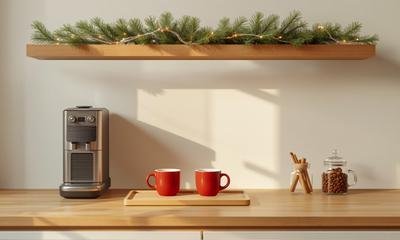
An office coffee corner benefits from the same styling rules as a home one — contain everything on a tray, store supplies in closed containers rather than packaging, keep four mugs out rather than twelve, and add exactly one non-functional item. Our coffee bar essentials checklist covers the full stocking order, and the kitchen counter guide has layout ideas that translate directly to an office kitchenette.
Frequently asked questions
What do you need for an office coffee station?
Less than you'd think: a brewing method that fits the space, a way to store beans or pods, mugs, and something to contain drips. In a shared office add a bin for grounds and a clear cleaning routine - the reason office coffee corners fail is almost never equipment, it's that nobody agreed who wipes it down.
What's the best coffee maker for a small office?
For 1-3 people, a pour-over dripper or a single-serve machine. For 4-10, a thermal carafe drip machine that keeps coffee hot for hours without a hotplate scorching it. Above 10 people you want a larger airpot brewer. The most common mistake is buying an espresso machine for a shared office - it needs cleaning after every use and nobody does it.
Can I have a coffee maker at my desk?
Usually yes, if it's small, quiet and doesn't trip a breaker. A pour-over dripper or French press needs only hot water and makes no noise, which is why they're the safest desk options. Check your office rules first - some ban personal heating appliances entirely, and a kettle is more likely to be restricted than a dripper.
How do I stop the office coffee station getting messy?
Contain it and make cleanup obvious. Everything on one tray or mat so spills stay in one place, a small bin for grounds within arm's reach, and supplies stored in closed containers rather than torn packaging. Visible mess breeds more mess; a defined boundary is what stops the spread.
What's a good coffee setup for a home office?
A small cart or a shelf section near the desk, so you don't break focus walking to the kitchen. A slim machine, four mugs, a canister and a tray covers it in about 20 inches. Keep it out of arm's reach of your keyboard - the one rule that saves a laptop eventually.