Coffee Bar Essentials List: What You Actually Need at Home
Coffee bar shopping lists on the internet have a problem: they're written for coffee shops — commercial tampers, pitcher rinsers, thermometers — or they list nineteen items as "essential" when five would do. This is the home version, with honesty built in: what you actually need, what's genuinely worth adding, and what can wait.
Work through the tiers in order. Each one assumes you have the previous.
What goes on a coffee bar? The short list
If you want the answer without the reasoning, here it is - the items that go on essentially every home coffee bar:
Then, if you want them: milk frother · burr grinder · mug hooks · scoop or scale · filtered water
Five items make a complete coffee bar. The next five make it better. Most of what else appears on coffee bar necessities lists online is optional, and a fair amount of it is café equipment that has no business on a kitchen counter. The rest of this guide covers the reasoning, the order to buy in, and what each tier actually costs.
Tier 1: The true essentials (every coffee bar)
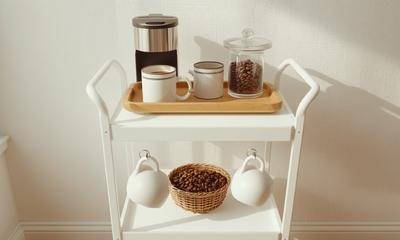
- ☕ A brewing device you love using. Drip, espresso, pour-over, pods — the style matters less than the daily joy. Choosing one is step two of our coffee bar build guide; espresso-curious readers should start with the beginner machine guide.
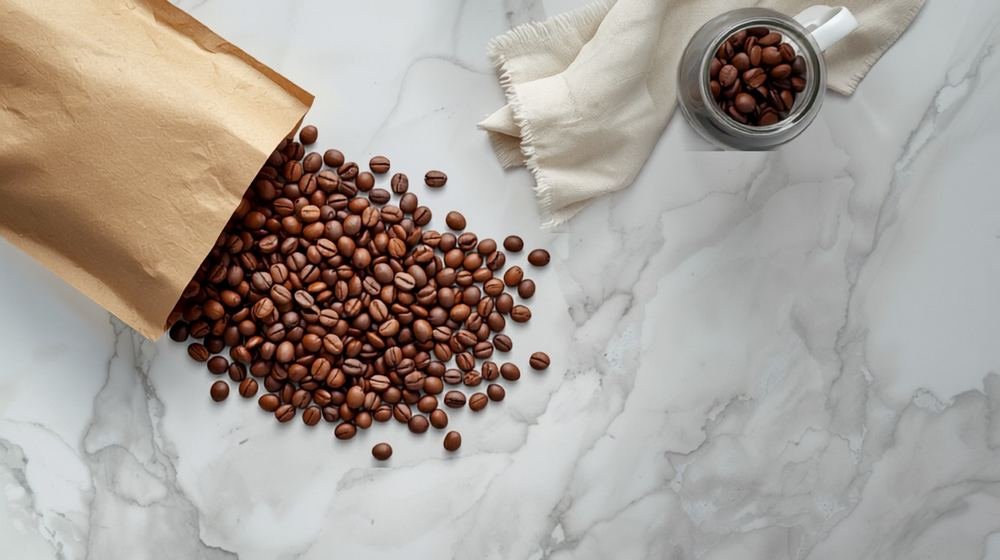
- 🫙 An airtight coffee canister. The least glamorous item with the biggest flavor payoff — beans in a torn bag go noticeably stale within a week. One good canister fixes it forever.
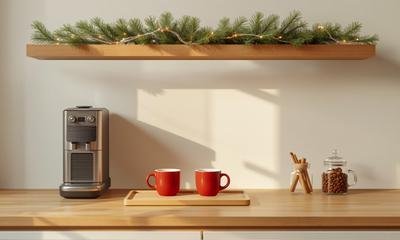
- 🍽️ A tray or bar mat. The boundary-maker. A tray or bar mat is what visually turns "appliances on a counter" into "a coffee station" — and catches every drip.
- ☕ Your best four mugs. Not all nineteen. The favorites live at the station; the rest live in a cupboard. Editing is the cheapest styling trick there is.
- 🗄️ Daily-supply organization. Pods, filters, sweeteners, and spoons in one contained spot. Which type fits your setup — drawer, tiered, tray, or carousel — is exactly what our organizer guide sorts out.
Tier 2: The worth-it upgrades
- 🥛 A milk frother. The highest happiness-per-dollar addition in home coffee — $15 turns coffee into lattes. Handheld or electric is a real decision though: our frother comparison settles it in two minutes.
- ⚙️ A burr grinder. If you brew with beans, grinding fresh beats any machine upgrade at any price. A $50–100 burr grinder is plenty to start.
- 🪝 Mug hooks or a mug tree. Frees counter and shelf space, adds the cozy café look. A mug tree for counters, adhesive hooks for renters, a wall rack if you can drill.
- 🥄 Proper measuring. A dedicated scoop that lives in the canister — or for pour-over people, a small scale — ends the guessing.
- 💧 Filtered water. Bad tap water makes bad coffee in any machine. A basic filter pitcher improves flavor more than most gear swaps and protects espresso machines from scale.
Tier 3: The finishing touches
- 🎨 One decorative element. A small coffee bar sign, a plant, or a framed print. Exactly one — the one-accent rule is what keeps small stations looking calm (all 27 layouts in our small-space ideas guide follow it).
- 🍯 A syrup station, if you actually use syrups. Two or three bottles on a small riser or carousel. Skip if you're a black-coffee household — empty syrup racks are pure clutter.
- 🧺 A guest basket. Pods, teas, sweetener packets in one grab-able container that comes out when people visit.
- ✨ Under-shelf lighting. A battery puck light turns a dark corner station into the coziest spot in the house for roughly $15.
What you can confidently skip (at home)
- Milk thermometers, tamping mats, knock boxes — unless you're running a semi-auto espresso setup daily, these are café tools that colonize home lists.
- A dedicated pitcher rinser. You have a sink.
- Matching everything. A coordinated material family (say, bamboo + white ceramic) looks designed; a fully matched 12-piece set looks like a showroom.
- Anything "aesthetic" you wouldn't use weekly. The two-week rule from our build guide applies: live with the station first, buy what its gaps ask for.
Your essentials change with your brewing method
The tiers above are the universal core, but the fourth or fifth item you buy should depend on how you actually brew. Buying the wrong extras is how coffee corners fill up with things nobody touches.
| If you brew… | Add these next | Genuinely skip |
|---|---|---|
| Drip / filter | Burr grinder, airtight canister, filtered water | Tamper, knock box, frothing pitcher |
| Espresso | Burr grinder (non-negotiable), knock box, tamping mat, scale | Paper filters, gooseneck kettle |
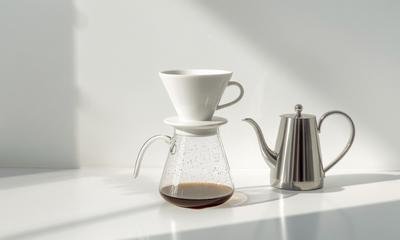
| Pour over | Gooseneck kettle, scale with timer, paper filters | Tamper, knock box, milk frother |
| Pods | Pod drawer/organizer, mug tree | Grinder, canister, scale — none of it applies |
| French press | Coarse-capable grinder, timer | Fine-grind gear, paper filters |
One line that saves money: if you brew with pods, almost nothing in Tier 2 applies to you. No grinder, no canister, no scale. Spend that budget on the station looking good instead — a tray, a pod drawer, and better mugs.
Check price on Amazon →The order to buy them in
Almost nobody builds a coffee bar in one purchase, and you shouldn't try. Here's the sequence that gets the most improvement per dollar, in order:
- Airtight canister (~$15). Cheapest, and it improves every cup you make from that day on because your beans stop going stale.
- A tray or mat (~$20). Turns the pile into a station. Purely visual, immediately satisfying.
- A burr grinder (~$60-100). The single biggest jump in how your coffee tastes. If you brew with beans, this is the one that matters.
- An organizer (~$25-40). Once you own more than beans and a machine, the clutter needs somewhere to live.
- A milk frother (~$15-50). Only if you drink milk drinks — but if you do, it's the most fun addition on the list.
- Everything decorative. Last, deliberately. By this point you know what the station actually needs.
What a full setup actually costs
Real numbers, so you can plan rather than guess:
| Setup | What's included | Total |
|---|---|---|
| Minimum viable | Your existing machine + canister + tray + 4 mugs | $50-75 |
| The realistic sweet spot | Above + burr grinder + organizer + frother | $180-250 |
| Full espresso corner | Above + entry espresso machine + knock box | $400-550 |
| Enthusiast build | Upgraded machine, better grinder, scale, cabinet | $900+ |
The honest observation: the jump from "minimum viable" to "sweet spot" is where nearly all the quality-of-life improvement lives. Beyond that you're buying refinement, not transformation.
The printable version
Tier 1: brewer · airtight canister · tray or mat · four favorite mugs · organizer
Tier 2: milk frother · burr grinder · mug hooks · scoop or scale · filtered water
Tier 3: one decor piece · syrup station (if used) · guest basket · puck light
Screenshot that, work down the list at your own budget's pace, and stop whenever it feels done — because it already was at Tier 1.
From here, three guides pick up the threads this one only touches: V60 vs Chemex vs French press settles which brewing device to build around, plastic-free coffee makers covers the glass, steel and ceramic options if that matters to you, and coffee bar decor handles the Tier 3 styling in far more depth.
Frequently asked questions
What are the essentials for a home coffee bar?
The honest core is just five things: a brewing device, fresh coffee stored airtight, your favorite mugs, a tray or mat to define the space, and a way to organize daily supplies. Everything beyond that — frothers, syrups, decor — is an upgrade, not an essential.
What do I need for a coffee bar for guests?
Add a second brewing option (pods are guest-proof), a visible sweetener and creamer station, extra mugs, and stirrers. The trick hosts learn fast: guests love serve-yourself stations, so make everything visible and labeled rather than tucked away.
How much does it cost to stock a coffee bar?
Using gear you already own, a defined and organized station costs $50–100 (tray, canister, organizer, hooks). Starting from zero with an entry espresso machine, budget $250–400. The checklist in this guide is tiered so you can stop at any budget line.
Do I need a coffee grinder if I buy pre-ground coffee?
If you're happy with your coffee, no — plenty of people drink pre-ground for years contentedly. But it's the upgrade most people notice most: pre-ground coffee loses its aromatics within days of opening, so a $60 burr grinder typically improves your cup more than a $300 machine upgrade would. If you brew with pods, it doesn't apply at all.
How much space do I need for a coffee bar?
A workable station fits in 18-24 inches of counter or shelf width. Going vertical — a wall shelf plus hooks above a slim table — can deliver a complete setup in the footprint of a dinner plate. The constraint that catches people out isn't width, it's height: measure the clearance under your upper cabinets before buying a machine with a bean hopper.
What's the one thing most people forget?
Water. If your tap water tastes off, your coffee will too, and no machine or grinder fixes it. A basic filter pitcher improves flavour more than most gear upgrades and protects espresso machines from scale, which is the most common cause of early failure.