Best Plastic-Free Coffee Makers (Glass & Steel Picks)
Search "plastic free coffee maker" and you'll get a lot of confident product lists and very little honesty about what's actually plastic-free. So let's start there, because it changes what you should buy.
Almost no electric coffee maker is entirely plastic-free. There's usually plastic in the housing, the switch, a seal, or the reservoir lid — even on machines marketed as glass and steel. What you can reliably control is whether plastic touches hot water. That's the meaningful distinction, and it's the standard this guide uses.
What you're actually trying to avoid
Two separate concerns get bundled together, and they deserve separating:
- Health. Modern machines use BPA-free plastics rated for hot liquids, and regulators consider them safe. The worry people raise is about long-term exposure to compounds that can migrate from heated plastic. It's genuinely debated rather than settled — worth knowing if you want to avoid it, not worth panicking about if you don't.
- Taste. This one is much less controversial, and it's what most people actually notice. New plastic can impart a faint chemical note; old plastic holds coffee oils that go rancid. If your coffee has tasted slightly "off" for a year, the machine is a likely suspect.
If taste is your motivation, the fix is often cheaper than you think — and doesn't require a new machine at all.
The genuinely plastic-free options (all manual)
Manual brewers win this category outright, because they have no pumps, reservoirs or internal tubing. There's nothing to hide plastic inside.
Ceramic or glass pour-over dripper
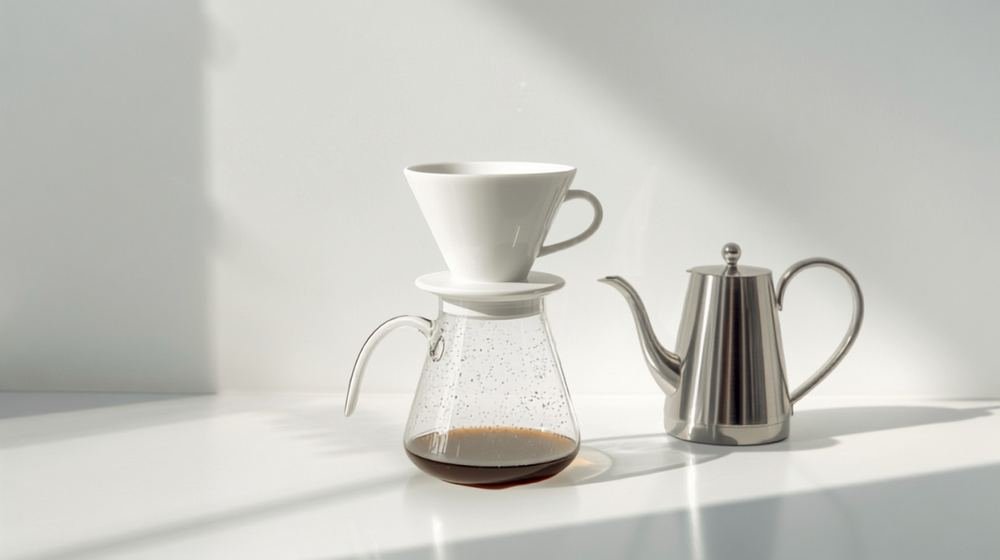
A ceramic dripper over a glass carafe is completely plastic-free through the entire brew path, costs $15-30, and makes genuinely excellent coffee. Pair with a stainless gooseneck kettle and paper filters and you have a setup with no plastic anywhere near hot water.
- Truly plastic-free, not marketing-plastic-free
- Cheapest entry by a wide margin
- Excellent cup quality
- Manual — 3-4 minutes of attention
- Makes one or two cups at a time
- Ceramic chips if dropped
Glass and steel French press
A borosilicate glass French press with a steel frame — check the plunger and lid, because cheaper models use a plastic ring or lid even when the beaker is glass. The good ones are glass, steel and nothing else.
- Makes 3-8 cups at once
- No filters to buy
- Very forgiving technique
- Needs a coarse, consistent grind
- Sediment in the cup by design
- Glass beakers do break
Stainless steel moka pot
A steel moka pot is all metal, lasts decades, and makes strong concentrated coffee. Note: the classic aluminium ones are also plastic-free, but if you'd rather avoid aluminium too, stainless is the pick.
- All metal, effectively indestructible
- No filters, no electricity
- Strong espresso-style coffee
- Not true espresso (lower pressure)
- Easy to scorch if you walk away
- Handle is usually the one plastic part
Stainless steel percolator
Old-fashioned, entirely metal, and still the standard for making eight-plus cups with no plastic anywhere. Stovetop versions have no electronics at all.
Check price on Amazon →Electric machines: what "plastic-free" realistically means
If you want a machine that brews on a timer while you shower, you're accepting some plastic. The realistic goal is minimising contact with hot water. What to look for:
| Component | What you want | Why it matters |
|---|---|---|
| Carafe | Glass or stainless steel | Holds hot coffee longest — biggest contact time |
| Brew basket | Stainless steel | Direct contact with hot water and grounds |
| Water reservoir | Glass or steel (rare) | Usually plastic; holds cold water, so lower concern |
| Internal tubing | Steel or silicone | Hardest to verify — most brands don't publish it |
| Shower head / lid | Steel | Sits in the steam path |
The honest caveat: internal tubing is where marketing and reality most often diverge. A machine can advertise a glass carafe and steel basket while running water through plastic tubing internally. Very few manufacturers publish this, so treat any "100% plastic free" electric claim with suspicion. If it genuinely matters to you, manual is the only way to be certain.
The cheapest fix, if taste is the problem
Before buying anything: if your coffee tastes faintly plastic-y, try descaling and deep-cleaning the machine you own. Old coffee oils in a plastic reservoir cause more off-flavours than the plastic itself does, and a $6 bottle of descaler often solves what people assume needs a $200 replacement.
Which one should you buy?
- You want genuinely plastic-free and don't mind manual: ceramic pour-over dripper. Cheapest and best cup.
- You need several cups at once: glass-and-steel French press.
- You want it to last forever: stainless moka pot or percolator.
- You need a timer and automation: accept some plastic, and buy for a glass carafe plus steel brew basket.
- You currently use pods: there's no plastic-free version of that format. Switching brewing method is the only route.
Don't forget the grinder
Plastic-free brewing pairs naturally with grinding fresh — and manual grinders are mostly steel and glass anyway, which suits this whole approach. Our under-$100 burr grinder guide covers both manual and electric picks, and the manual ones happen to be the plastic-lightest option in the category.
Setting up a station around one of these? The home coffee bar guide walks through the whole build, and countertop organizers covers keeping filters and beans tidy.
Frequently asked questions
Is it bad to brew coffee in a plastic coffee maker?
The honest answer is that it's debated, not settled. Most modern coffee makers use BPA-free plastics rated for hot liquids, and regulators consider them safe. The concerns people raise are about long-term exposure to compounds that can migrate from heated plastic, and about taste - hot plastic can impart a faint flavour, which is the complaint far more people actually notice. If you want to avoid it, you can, without spending much more.
Is any coffee maker 100% plastic free?
Almost none, and be sceptical of anything marketed that way. Manual brewers - pour-over drippers, French presses, moka pots, percolators - genuinely can be, because they have no internal parts. Electric machines nearly always contain some plastic somewhere, even if the water path is glass and steel. The realistic goal is no plastic touching hot water, not zero plastic in the object.
What's the cheapest way to brew coffee with no plastic?
A ceramic or glass pour-over dripper plus paper filters, about $15-25 total, with a kettle you probably already own. That's a genuinely plastic-free brew path for the price of two coffees out, which is why it's the honest first recommendation rather than a $200 machine.
Do stainless steel coffee makers taste different?
Compared to a plastic machine, many people report a cleaner taste - though that's partly because a new plastic machine off-gasses and an old one holds oils. Glass is the most neutral material of all. Steel is neutral too and far more durable, which is why it dominates the kettle and French press categories.
Are Keurig and pod machines plastic free?
No, and they can't really be. The water path runs through plastic, and the pods themselves are plastic heated under pressure. If avoiding plastic is your priority, pod machines are the one category to rule out entirely - there's no plastic-free version of the format.