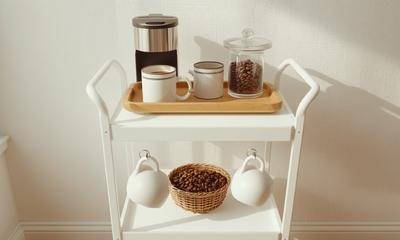
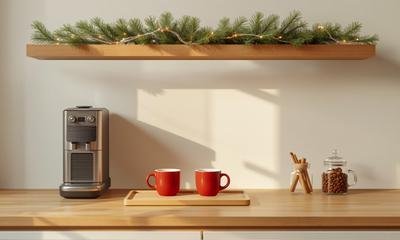
Best Coffee Station Organizers for Your Countertop (2026)
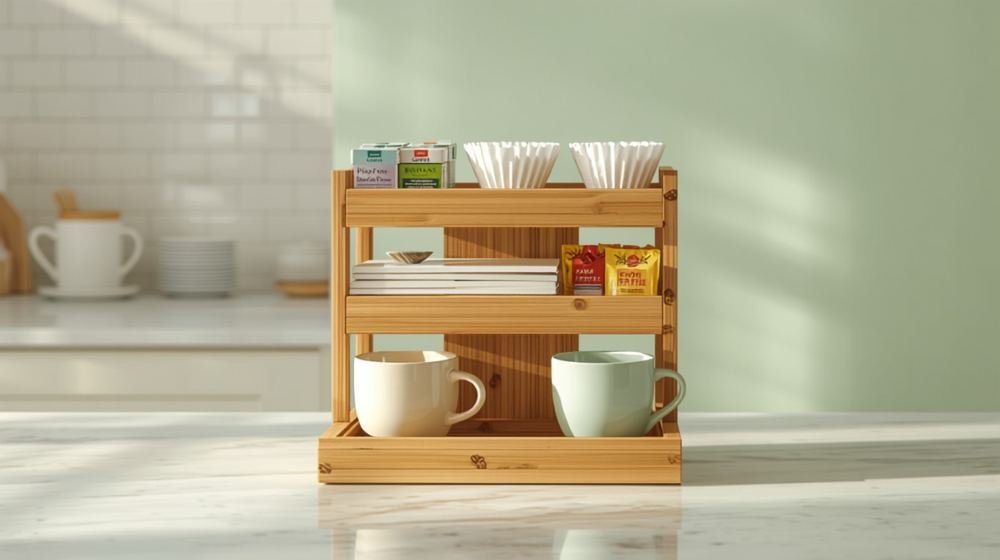
Every coffee station has a clutter phase: torn pod boxes, a sugar bag with a clip on it, filters wedged behind the machine. An organizer is a $20–40 fix that makes the whole corner look intentional — but the right type depends entirely on how you brew and how much counter you can spare. Here's the honest breakdown.
Which organizer type fits your setup
| Your situation | Best organizer type | Typical price |
|---|---|---|
| Pod brewer (Keurig/Nespresso) | Under-machine drawer | $15–30 |
| Tiny counter, lots of small items | Tiered shelf organizer | $25–45 |
| Drip or espresso, beans + filters | Bamboo organizer with canisters | $30–60 |
| Renter / moves things often | Tray-based station | $15–35 |
| Deep counter, full coffee bar | Lazy-susan / carousel combo | $20–40 |
The under-machine pod drawer (best for Keurig homes)
Under-machine drawer organizer
The cleverest use of space in the category: a slim drawer that slides under the brewer itself, storing 30–36 K-cups in a footprint you'd already given to the machine. The counter gains nothing new, yet the pod boxes vanish. Look for versions with a non-slip top and rolled steel or bamboo construction.
- Zero additional counter space used
- Raises the machine to a comfortable height
- Pods stay dust-free and visible
- Only useful if you brew pods
- Cheap versions flex under heavy machines
- Check machine clearance under cabinets first
The tiered organizer (best for small counters)
Two- or three-tier countertop organizer
This is the type we recommend most often, and the one that fits the small-space setups readers ask about: tiers stack sweeteners, pods, filters, and stirrers vertically, turning five scattered piles into one ~10-inch tower. Bamboo versions with small rattan or wire drawers look far more expensive than they are.
- Most storage per inch of counter
- Everything visible at a glance
- Works for any brewing style
- Can look busy if overfilled — edit ruthlessly
- Tall units tip if bumped when top-loaded
The bamboo organizer + canister combo (best-looking)
Bamboo organizer with airtight canisters
For bean brewers, the winning combination is a low bamboo organizer flanked by two airtight canisters — one for beans, one for backup. The warm wood tones photograph beautifully (this is the style all over Pinterest) and the canisters actually matter: beans kept in their torn bag go stale in days. If you're building the full station, our step-by-step coffee bar guide covers where this fits.
- The best-looking option by a distance
- Canisters genuinely extend bean freshness
- Low profile fits under cabinets easily
- Costs more than plastic alternatives
- Bamboo needs an occasional oiling to stay nice
The tray station (best for renters)
A good tray
Underrated and under $30: a wooden or metal tray with a raised edge instantly defines a station on any surface — kitchen counter, cart, dresser, or console. When you move (or host), the whole coffee bar lifts and relocates in one trip. It's also the least commitment: if your setup evolves, the tray still works.
- Cheapest way to make gear look intentional
- Portable — the whole station moves at once
- Contains drips and rings
- No vertical storage — capacity is limited
- Doesn't hide anything; tidiness required
The carousel (best for syrup collectors)
Lazy-susan carousel
If your station has grown into syrups, multiple sweeteners, and a tea section, a rotating carousel keeps the back row reachable without knocking over the front row. It needs a deep counter to earn its space — on a shallow one it wastes more room than it saves.
- Back-row items stay accessible
- Handles tall bottles tiered organizers can't
- Needs 12"+ of counter depth
- Overkill for simple setups
The acrylic organizer (best for seeing what you have)
Clear acrylic coffee bar organizer
Clear acrylic solves a problem the pretty bamboo units create: once pods and sachets are behind a wooden front, you stop seeing what is running low and start buying duplicates. Acrylic also visually disappears on a busy counter, which matters when the coffee corner shares space with everything else in a working kitchen.
- You can see stock levels without opening anything
- Reads as smaller than it is on a crowded counter
- Wipes clean in seconds — no oiling, no water marks
- Shows every fingerprint and coffee-dust smear
- Thin acrylic cracks at the corners if you overload a drawer
- Hides nothing — a messy interior stays visible
Mug storage: the part most organizers ignore
Mug rack, tree or under-shelf hooks
Almost no countertop organizer holds mugs, which is odd, because mugs are the bulkiest thing on a coffee bar and the reason the counter looks cluttered. Solve it separately. A vertical mug tree costs little and takes one mug-width of counter; hooks under a cabinet or shelf cost less and take none at all. Either beats stacking mugs, which chips rims and means handling three to reach the one you want.
- Frees the organizer for small items, which is what it is good at
- Hooks use dead vertical space you are already paying rent on
- Everyday mugs stay to hand; the rest can live in a cupboard
- Trees tip if you hang heavy mugs on one side only
- Adhesive hooks fail on textured or freshly painted surfaces
- Open mug storage collects kitchen grease — expect to wash before use
How to measure before you buy
The single most common return in this category is an organizer that doesn't fit. Three measurements prevent it, and they take two minutes:
- Cabinet clearance (height). Measure from the countertop to the underside of your upper cabinets. Most kitchens give 17-19 inches. A tiered organizer plus the items on top has to fit inside that — and if you're putting a machine on a drawer organizer, add the machine's height too.
- Usable depth. Standard counters are 24-25 inches deep, but the back 4-6 inches often has a backsplash, outlets or a lip. Measure what you can actually use, not the counter spec.
- The width you're willing to give up. Be honest here. An organizer that technically fits but leaves you no prep space gets moved within a month.
Coffee station organization: how to actually organize it
Buying the organizer is half the job. What goes in it decides whether the corner stays tidy:
- Zone by frequency, not by category. Daily items at the front and at eye level; weekly items behind; monthly items in a cabinet entirely. Most cluttered stations are cluttered because everything is stored at the same priority.
- One week of supplies, maximum. The organizer holds what you'll use in seven days. The backup box of pods lives elsewhere. This one rule fixes most overflow problems permanently.
- Decant, don't stack packaging. Torn boxes and bags are what actually makes a station look messy — not the number of items. Sweeteners into a small jar, pods out of the cardboard.
- Leave one empty slot. A station that's 100% full looks crammed and has nowhere to put a new bag of beans. Aim for about 80% occupancy.
Organizer vs drawer vs cabinet: which is right
| Approach | Best when | Trade-off |
|---|---|---|
| Countertop organizer | You want everything visible and reachable | Uses counter space; needs editing to stay tidy |
| Under-machine drawer | You brew pods and counter space is tight | Only really works for pods |
| In-drawer insert | You want the counter completely clear | Out of sight means you forget what you have |
| Closed cabinet | You want the coffee gear to disappear | Extra step every morning; see our cabinet guide |
Most people are happiest with a countertop organizer plus one drawer for overflow — visible for the daily items, hidden for the rest.
Three rules that matter more than the product
- Store a week, not a warehouse. The organizer holds what you use daily; the cabinet holds the rest. Overstuffed organizers recreate the clutter they were meant to fix.
- Match the material to the room. One material family (bamboo/wood or matte metal) across organizer, tray, and canisters makes a $60 setup look designed.
- Measure cabinet clearance first. The classic mistake: a tiered organizer or machine-on-drawer combo that no longer fits under the upper cabinets. Measure before you order.
Bottom line
Pod brewers: get the under-machine drawer. Small counters: the tiered organizer. Bean brewers who care how it looks: bamboo + canisters. Renters and minimalists: start with a good tray — you can always add the rest later, and our coffee bar essentials checklist covers what actually deserves the space. Once the clutter is contained, the coffee bar decor guide picks up where this one stops — containing first, styling second, which is the order that works. For a desk or break-room setup the constraints shift again; the office coffee station ideas cover those.
Frequently asked questions
What should go in a coffee station organizer?
The daily-use items only: pods or beans, filters, sweeteners, stirrers, and a spoon. Backup supplies (bags of beans, boxes of pods, occasional syrups) belong in a cabinet or drawer — the organizer is for what you touch every morning, not your whole inventory.
How do I organize a coffee station on a small counter?
Go vertical: a two- or three-tier organizer stacks pods, filters, and sweeteners into one small footprint. Pair it with wall hooks for mugs and you can run a full station in under 20 inches of counter width.
Are K-cup drawer organizers worth it?
If you brew with pods, yes — a drawer that sits under the machine stores 30+ pods in space the machine was already occupying. It's the single most space-efficient organizer type. Just check the drawer height against your machine's clearance before buying.
How do I stop my coffee station from getting cluttered again?
Store one week of supplies, not your whole inventory — that single rule prevents most re-cluttering. Decant sweeteners and pods out of their packaging (torn boxes are what actually reads as mess), and keep the organizer at roughly 80% full so there's room for a new bag of beans without restacking everything.
What size coffee station organizer should I get?
Measure three things first: cabinet clearance above the counter (usually 17-19 inches), usable counter depth after the backsplash and outlets, and the width you're genuinely willing to give up. Most returns in this category are organizers that technically fit but leave no working space.
Are bamboo coffee organizers better than metal or plastic?
For looks, yes — bamboo photographs well and matches most kitchens, which is why it dominates Pinterest. Functionally there's little difference. Bamboo needs occasional oiling to avoid drying out; coated metal is more forgiving near a sink or steam wand. Choose on the material already in your kitchen, not on performance.
What size organizer fits a narrow counter?
Measure the usable depth first, not the width — most counters are about 24 inches deep but a backsplash, outlets and the machine itself eat into that fast. On a narrow run, look for units under about 6 inches deep and go vertical instead: a two-tier tower holds as much as a wide caddy in half the footprint. A unit that overhangs the counter edge is the one you will knock daily.
Is a coffee organizer with a drawer worth it?
Only if the drawer slides on a real runner. The cheap ones are a tray in a slot, and once a sachet slips behind it the drawer jams and never runs smoothly again. Drawers are genuinely good for pods and flat items, and genuinely bad for anything tall or loose — sugar sachets and stirrers do better in an open tier where you can see them.
Where should sugar, syrups and condiments go?
Not in the main organizer, if you can help it. The small loose items are what make a coffee bar look messy, and they multiply. Give them one closed container or a small carousel and accept a hard limit: when it is full, something goes. This one rule does more for how the station looks than any product you can buy.